Septic system safe toilet paper breaks apart quickly in water, uses little to no dyes or lotions, and leaves minimal lint. Choose a quick‑dissolve roll that passes a simple home jar test, then pair it with smart use habits. Together, these steps protect your tank, drain field, and budget over time.
Do you want toilet paper that is kind to your septic system in Puyallup? This guide explains what truly makes paper safe, what labels really mean, how tanks work, and which products to try. You will also learn an easy test you can do at home. Septic Pumping Puyallup shares practical tips any household can follow.
Table of Contents
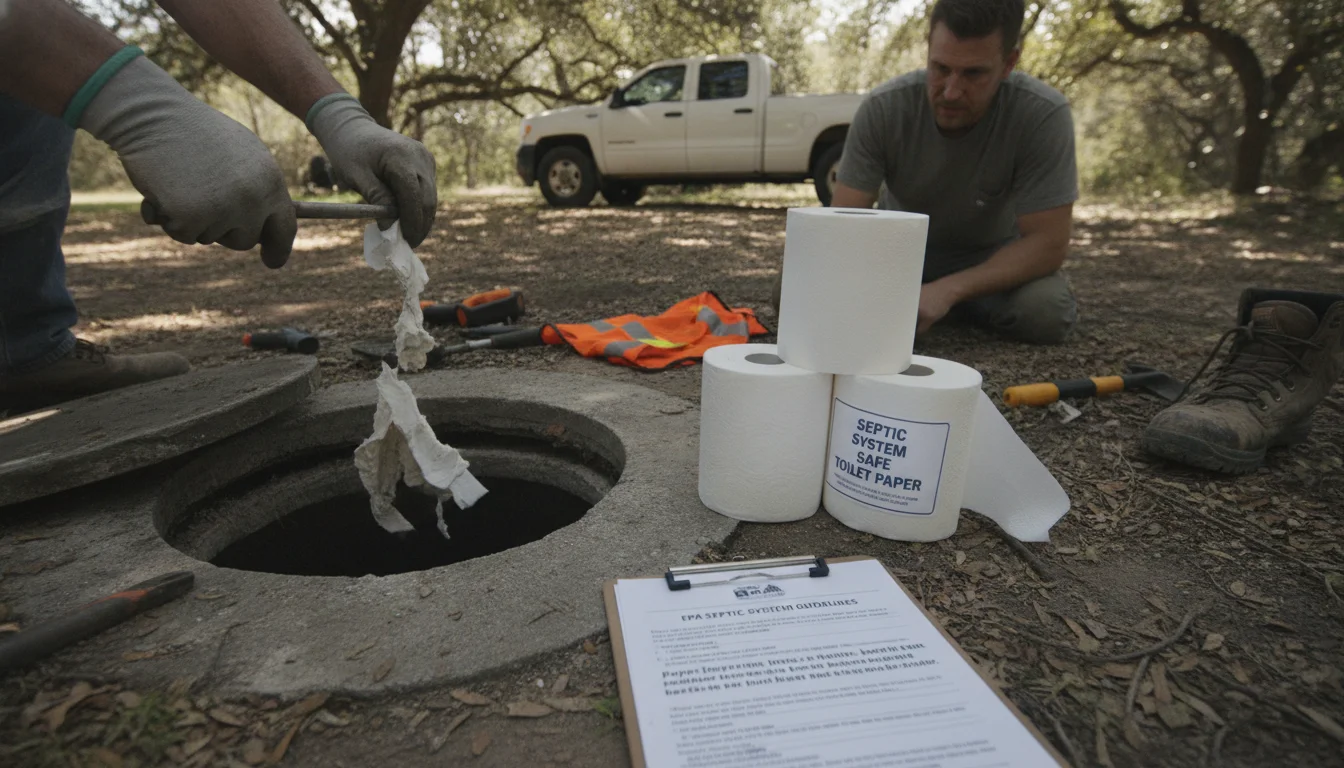
- What makes toilet paper safe for a septic system?
- Is “septic-safe” or “biodegradable” toilet paper really different?
- Should you choose 1‑ply or 2‑ply for a septic system?
- Are recycled-fiber and bamboo toilet papers OK for septic tanks?
- Do ultra-soft, quilted, or lotion-infused rolls harm a septic system?
- Are flushable wipes or paper towels septic system safe toilet paper?
- How can you test toilet paper at home and use it the right way?
- Frequently Asked Questions
- Key takeaways
- Conclusion
What makes toilet paper safe for a septic system?
Toilet paper is safe for a septic system when it disperses rapidly, adds as little sludge as possible, and avoids sticky additives. A septic tank is a buried, watertight container for household wastewater. Solids settle to a sludge layer, fats form a scum layer, and the clarified liquid (effluent) travels to the drain field for soil treatment.
How a septic tank breaks down paper and solids
Inside the tank, beneficial bacteria digest organic waste. They work best when solids soften and spread quickly. Dense, glue‑heavy paper can clump, creating mats that sink slowly and stay as sludge. Too much sludge can clog the outlet baffle and push solids toward the drain field.
Septic Tank Pumping removes that sludge before it causes trouble. Still, what you flush daily matters. Paper that falls apart within seconds becomes small pieces, giving bacteria more surface area to digest—speeding breakdown and reducing long‑term buildup.
Labels and certifications that actually matter
Some labels help. A “rapid dissolve” claim can be useful if the sheet truly breaks down. Look for independent testing or confirm performance with the jar test at home. Sustainability certifications can guide you as well. Green Seal GS‑1 sets standards for tissue products, including limits on additives and requirements for responsible fiber sourcing (Green Seal GS‑1).
For basic function, “septic‑safe” is not a government standard—it’s a manufacturer claim. So always test a new roll. Pair that habit with regular Septic Inspection to keep your system in Puyallup running smoothly.
Is “septic-safe” or “biodegradable” toilet paper really different?
“Septic‑safe” and “biodegradable” sound similar but mean different things. Biodegradable means a material can break down over time, which could still be slow. Septic‑safe should imply rapid breakup in water and in the low‑oxygen (anaerobic) conditions inside a septic tank.
Marketing claims vs. recognized standards
There is no single U.S. rule defining the “septic‑safe” logo—brands choose the term. The FTC Green Guides caution that broad “biodegradable” claims can mislead if they lack clear context (FTC Green Guides). What truly helps is a simple, visible home test. Also look for responsible labels like Green Seal GS‑1, which limit dyes and lotions and encourage better fiber choices.
What really happens in the tank and the verdict
In the tank, paper meets still water, low oxygen, and active bacteria. If a product relies on strong binders, heavy lotion, or long, dense fibers, it may stay intact too long, driving sludge levels up faster. When sludge nears the outlet, you risk backups and drain field strain.
Verdict: Treat “septic‑safe” and “biodegradable” as hints, not proof. Choose paper that passes a quick home shake test, use modest amounts, and keep up with Septic Tank Pumping on schedule. When you’re unsure, ask for a Septic Inspection to check sludge and scum levels in Puyallup homes.
Should you choose 1‑ply or 2‑ply for a septic system?
Ply count matters less than how fast the sheet falls apart. That said, ply affects fiber structure. Many 1‑ply papers dissolve quickly because they use fewer binders. Some 2‑ply options also break up fast if they rely on light embossing and minimal lotions.
Dissolvability tests and fiber structure
Do a jar test for both 1‑ply and 2‑ply. Place 5–6 squares in a water‑filled jar and shake hard for 10 seconds. If it looks like confetti in water, that’s good. If it gels or clumps, that’s risky. Virgin softwood (long fibers) can be strong and slower to break without the right design; shorter fibers often disperse faster.
Embossing can trap air to feel soft while slowing water penetration. Glues that bond plies can also resist breakup. The priority is quick dispersion. The faster it falls apart, the better for your tank and baffles.
The verdict and safer product picks
Verdict: Pick the fastest‑dissolving option you’re comfortable using. Many lighter 2‑ply rolls pass the shake test and still feel good. If a 2‑ply fails, try a plain 1‑ply that passes. Using fewer squares makes an even bigger difference than ply count.
When you switch brands, test again. Pair wise paper use with routine Septic Tank Pumping and, when needed, Septic System Repair to restore parts like outlet tees or effluent filters.
Are recycled-fiber and bamboo toilet papers OK for septic tanks?
Yes, many recycled and bamboo products are fine—if they break down fast. Recycled‑fiber tissue often uses shorter fibers that disperse readily. Bamboo can be soft yet strong, so the overall sheet design matters most. Always run the same jar test.
How alternative fibers behave in a septic tank
Recycled tissue can include short fibers that lose wet strength quickly, helping bacteria get to work. Bamboo fibers are sometimes longer and tougher; if the sheet relies on heavy binders to feel plush, it may resist breakup. Without those binders, bamboo can still dissolve well.
Some buyers look for tissue with recycled content for its environmental benefits. Eco labels are helpful for sourcing and chemical limits, but you should still confirm tank performance with a home test.
Tradeoffs, verdict, and safer alternatives
Tradeoffs: Recycled content may disperse faster yet feel less soft; bamboo can feel great but sometimes needs design choices that affect breakup. Let the jar test be your tiebreaker.
Verdict: Both recycled and bamboo can be safe for tanks. Choose whichever falls apart fastest in your home water. To reduce impact on the drain field, pick the product that disperses first and train the family to use fewer squares.
If your drains slow or you notice odors, schedule a Septic Inspection. If your drain field is stressed, consider Drain Field Repair to restore function in Puyallup soils.
Do ultra-soft, quilted, or lotion-infused rolls harm a septic system?
They can. Ultra‑soft, quilted, scented, or lotion‑coated papers often use additives and thicker sheets that resist water. These feel nice but can delay breakup in the tank, causing more sludge sooner and a higher risk of clogs at the outlet or in the line.
Additives, binders, and breakdown in the tank
Additives like lotions and waxy softeners coat fibers, slowing water from entering the sheet. Strong glues hold plies together and resist tearing. Heavy embossing can create layered structures that trap air and slow wet‑out. All of this can produce clumps that settle and build sludge.
A healthy tank depends on steady flow and easy‑to‑digest solids. When paper lingers intact, bacteria work harder and overall balance can slip. The EPA explains how septic systems rely on natural treatment in the tank and soil to function properly (EPA Septic Systems Overview).
Verdict and what to buy instead
Verdict: Skip lotion‑infused, extra‑quilted, and heavy‑scented rolls. Choose plain, unscented paper that passes the shake test. Many “rapid dissolve” or “RV/marine” styles perform well—just confirm with your jar test.
If someone in the household prefers extra‑soft paper, set a “3–4 squares” habit and consider a second flush for larger loads. Keep your system on a regular Septic Inspection cycle and address any needed Septic System Repair before it grows into a larger issue.
Are flushable wipes or paper towels septic system safe toilet paper?
No. “Flushable” wipes and paper towels are not septic system safe toilet paper. Wipes can remain intact for days, and paper towels are designed to resist water. Both can snag on roots, fittings, or baffles and start a blockage.
What actually happens when these products are flushed
In the tank, wipes and towels don’t break down like toilet paper. They can wrap around the inlet baffle or pump impellers in aerobic units. In the drain field, they may carry fibers that plug soil pores. Many utilities warn against flushing wipes at all, even those labeled “flushable.”
Once a wad forms, you may notice slow drains, gurgling, or sewage odors. That often leads to emergency pumping or line clearing. Repeated issues can harm the drain field and shorten its life.
The clear verdict and better alternatives
Verdict: Do not flush wipes, paper towels, facial tissue, cotton pads, or dental floss. Only flush human waste and toilet paper that passes the jar test. If wipes are needed, place them in a bin.
If wipes have caused trouble, schedule Septic Tank Pumping and request a Septic Inspection to check baffles and the effluent filter. If components are damaged, book Septic System Repair with a local pro in Puyallup.
How can you test toilet paper at home and use it the right way?
A simple jar test shows how fast paper breaks up in your water. It takes just a couple of minutes and can save your tank. Teach the whole family. Good daily habits make an even bigger difference, from using fewer squares to keeping wipes out of the bowl.
The jar/shake test step-by-step
- Fill a clear jar halfway with tap water.
- Add 5–6 squares of the toilet paper.
- Close the lid and shake hard for 10 seconds.
- Set it down and watch for 30 seconds.
- Pass: paper looks like confetti and floats around.
- Fail: paper clumps into a gel or big flakes.
Test a few brands and choose the one that disperses fastest. Re‑test if your water source changes or you switch brands.
Daily habits that protect your septic system
- Use fewer squares and avoid large wads; teach kids a “3–4 squares” guideline.
- Do not flush wipes, paper towels, cotton swabs, or hygiene products.
- Space out laundry and dishwasher cycles to avoid overloading the tank.
- Fix running toilets and drips to reduce excess water.
- Pump the tank on a schedule based on usage and tank size.
- Book a Septic Inspection before buying or selling a home in Puyallup.
Septic Pumping Puyallup helps families across Puyallup every week with Septic Tank Pumping, Septic Inspection, and Drain Field Repair. If a toilet gurgles, drains slow, or the yard smells, act early to protect your drain field.
Frequently Asked Questions
How does a septic system work?
A septic system treats wastewater on your property. Solids settle into sludge, fats form a scum layer, and liquid effluent flows to a drain field. Soil finishes the treatment. Regular Septic Tank Pumping and careful toilet paper choices keep this process running well.
Is there a list of things not to put in a septic tank?
Yes. Do not flush wipes, paper towels, diapers, feminine products, condoms, floss, cotton swabs, or cat litter. Do not pour grease, oils, paint, solvents, or harsh drain cleaners down drains. Only flush human waste and septic system safe toilet paper that passes a jar test.
How often should a tank be pumped?
It depends on tank size, household size, and habits. Many homes pump every 3–5 years. Heavy use or frequent guests may shorten that cycle. A Septic Inspection can measure sludge and scum to set the right schedule for your home in Puyallup.
How can I find my septic tank lid?
Look for the main sewer cleanout near the house and follow a straight line out into the yard, often 10 to 25 feet from the foundation. Probe gently to find the tank edges. Lids are often 6–24 inches below grade. If unsure, schedule a Septic Inspection to locate and map the tank safely.
Are bamboo or recycled papers safer for tanks?
They can be, but only if they break up fast. Many recycled options disperse well due to shorter fibers. Some bamboo papers also pass if they use minimal binders. Always do a jar test and choose the fastest‑dissolving option your family likes.
Key takeaways
- Pick toilet paper that passes a 10‑second jar shake test.
- Skip wipes, paper towels, and lotion/scented rolls.
- Use fewer squares and fix leaks to protect the tank and drain field.
- Keep up with Septic Tank Pumping and a regular Septic Inspection in Puyallup.
- Test new brands and choose the one that disperses fastest in water.
Conclusion
Safe toilet paper breaks up quickly, avoids heavy lotions and dyes, and helps keep sludge low. Labels can guide you, but the jar test is your best check. Pair smart paper choices with timely Septic Tank Pumping and Septic Inspection for a healthy system in Puyallup. Contact us.
Septic Pumping Puyallup is here to help your system stay healthy. From Aerobic Septic System Service to Septic System Installation and Septic System Repair, the team supports homeowners and businesses step by step across Puyallup.
If you are not sure which of these you are dealing with, it is worth having someone look at it before it turns into a bigger job. Get in touch with Septic Pumping Puyallup today and we will tell you where you stand.